Admire the murals in Buitenhof District
Mural art tour in Delft
Do
Always on display in Gillisbuurt, Buitenhof District Delft
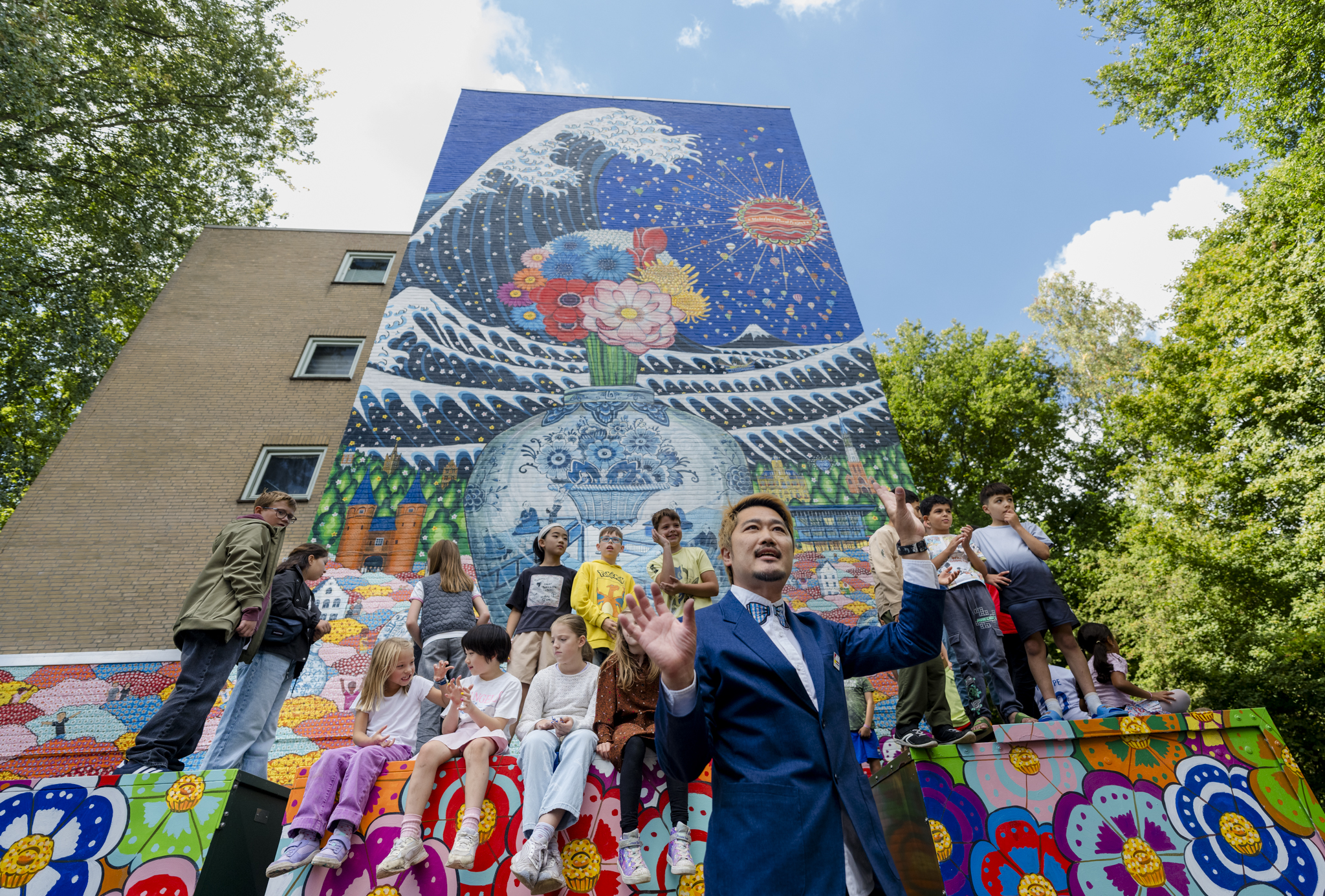
There are five murals to admire in Gillisbuurt, Buitenhof District Delft - a true art route! The murals were all created in collaboration with the neighborhood, but each has its own theme. We would like to highlight three that were created in collaboration between the CANIDREAM foundation and the museum. Cherished by BEYOND (Haydnflat), Tunagari by Kensuke Miyazaki (Bachflat), and Meri Kahani by Laxmi Manuela (Schubertflat).
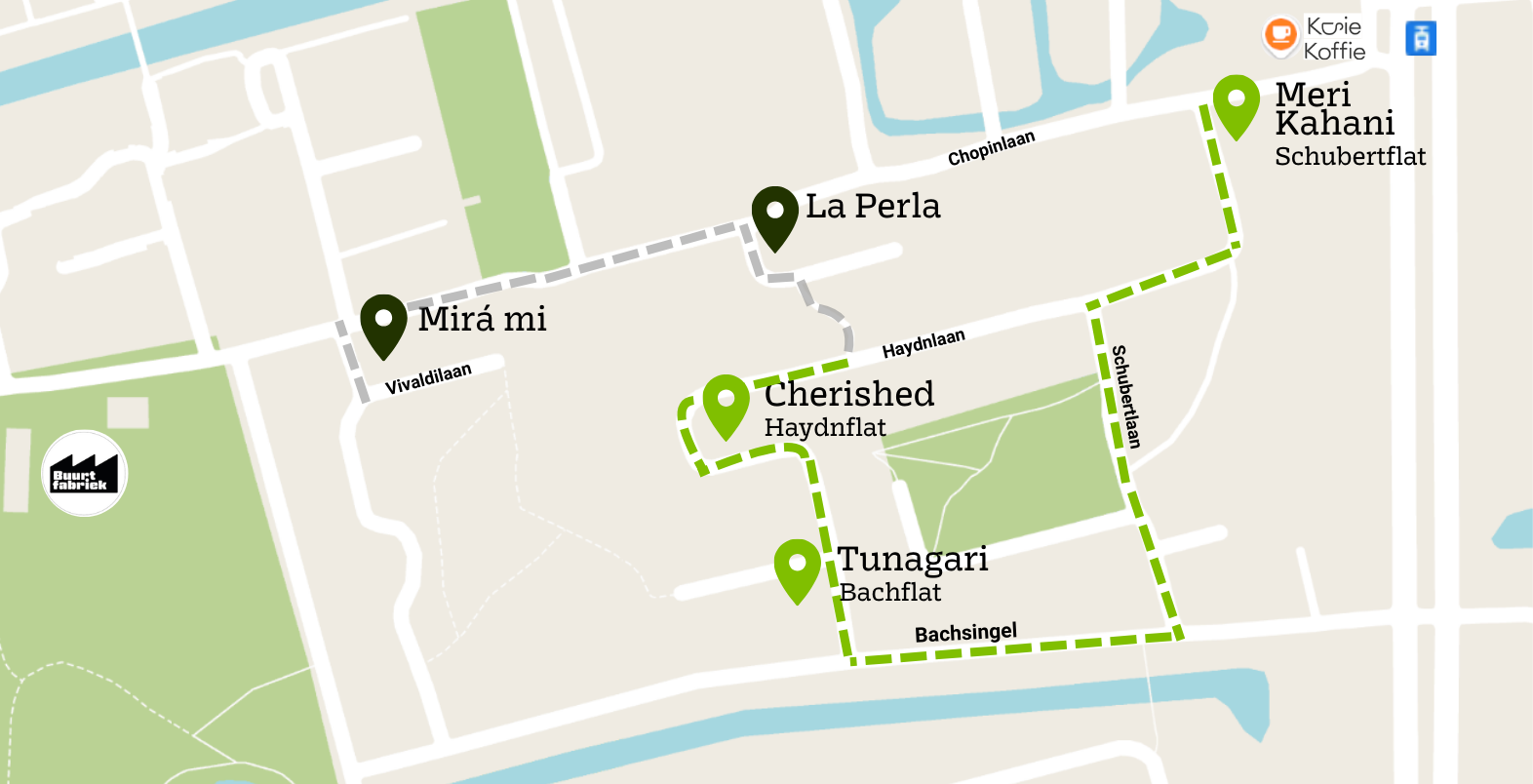
Map showing the five murals in the Buitenhof neighbourhood: La Perla by Tymon de Laat, Mira Mi by BEYOND, Cherished by BEYOND, Tunagari by Kensuke Miyazaki, Meri Kahani by Laxmi Manuela
Cherished
Together with artist BEYOND and the CANIDREAM foundation, the museum engaged local residents in a conversation about the question ‘What do you cherish?’. This conversation was continued during a visit to the museum. In Cherished, BEYOND beautifully depicts the collected stories and combines them with the collection of Delft pottery he saw in the museum. He says the following about this:
"This mural was inspired by the conversations I had with residents during a visit to the museum. Although the residents have diverse cultural backgrounds, they share many common values such as family, eating together, caring for each other, dreams, and nature.
Hands are central to my painting—all of them belonging to the residents themselves. These hands embrace the apartment building in which they live. The mural is an ode to the power of community, the beauty of diversity, and the shared values that connect us."
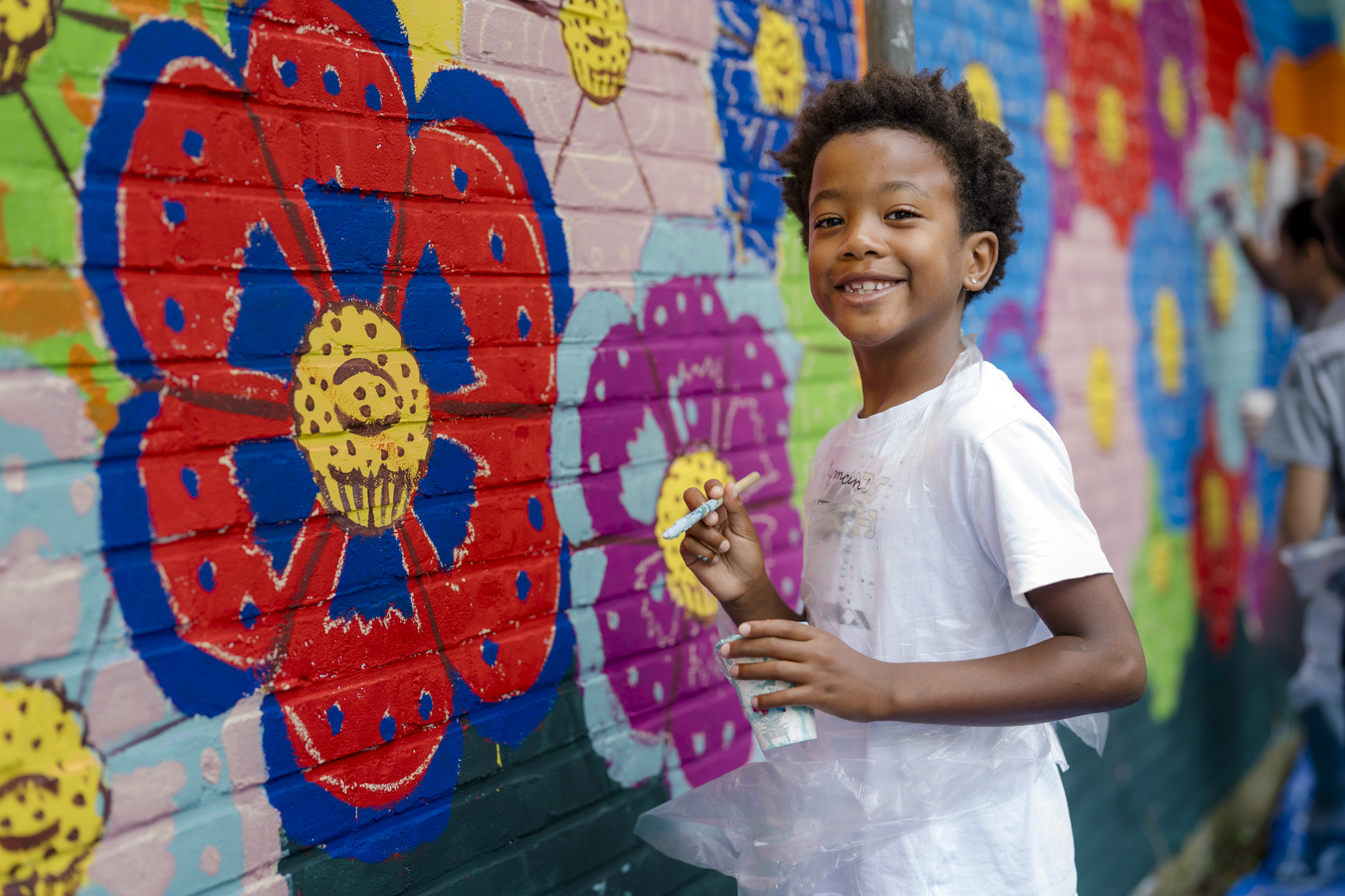
Local residents also helped with the execution of the mural. On the rear facade of the flat and on the concrete benches in the park in front of the building, several residents of Delft, under the guidance of BEYOND and his partner Laxmi, contributed to the artwork.
Five beautiful videos were made of the creation of Cherished. Watch them via this link.
Cherished is one of 20 Museum Murals in the Netherlands. Discover all 20 at museummurals.nl.


Tunagari – Connections
On the Bachflat, you can see the mural “Tunagari,” Japanese for “Connections.” The artwork was created by artist Kensuke Miyazaki from Over the Wall, to mark the 425th anniversary of relations between Japan and the Netherlands. The painting is part of the NOBIS Community Art program, an initiative of the CANIDREAM Foundation in collaboration with Museum Prinsenhof Delft and Woonbron.
Miyazaki was inspired by the centuries-long cultural exchange between the two countries. In the 17th century, Japanese porcelain from the town of Arita was exported to the Netherlands by the Dutch East India Company. The refined designs had a major influence on the development of Delft pottery. At the heart of the painting is a large vase: the floral motif at the top refers to Delft Blue, while the images of porcelain makers below come from a famous dish from Arita. Together, these elements represent the bond that has endured for four centuries.
Artist Kensuke Miyazaki explains:
“The background refers to the iconic Great Wave off Kanagawa by Japanese artist Hokusai. The sea that once connected Japan and the Netherlands symbolizes the flow of culture, ideas, and people that has shaped today's open and diverse society. In the painting, the splashing water turns into blossoms that spread throughout the city, representing the lively and joyful spirit of modern Delft. The sun on the right is a recurring motif in my murals around the world. It symbolizes that all people live together under the same sun—a message of unity, peace, and shared humanity."
The residents of Buitenhof also played an important role. The flowers were painted together with children from the neighborhood, with each child freely choosing the colors. As a result, the work reflects not only history and symbolism, but also the creativity and voices of the people of Delft themselves.
Tunagari is therefore more than just a painting: it is a symbol of friendship, cultural exchange, and mutual respect—between Arita and Delft, and between Japan and the Netherlands.
Tunagari and Meri Kahani are part of NOBIS 4. Entitled “Restoring the Balance,” two historical stories intersect in the present about the role of the Dutch East India Company in the past.
Meri Kahani – My Story
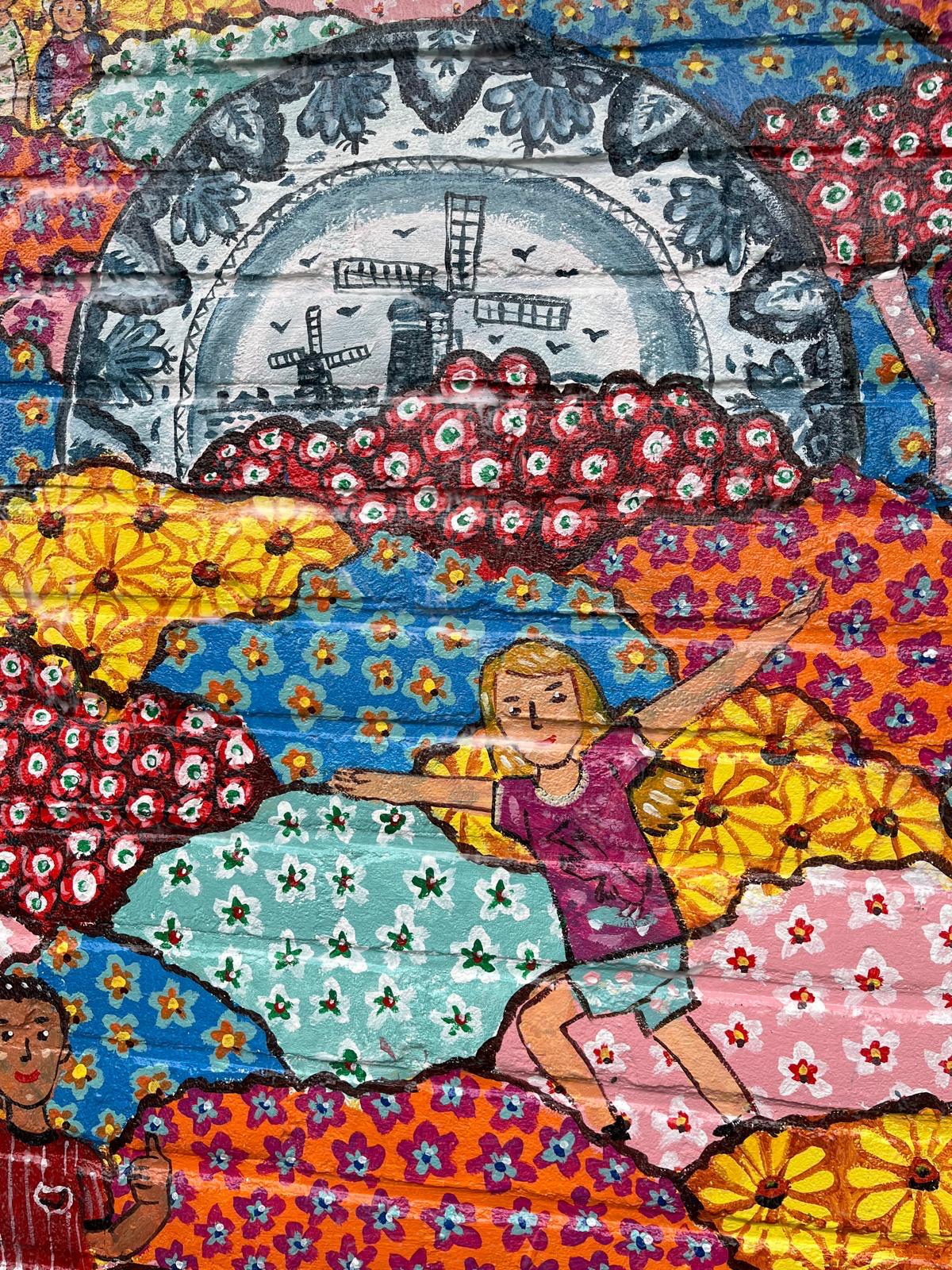
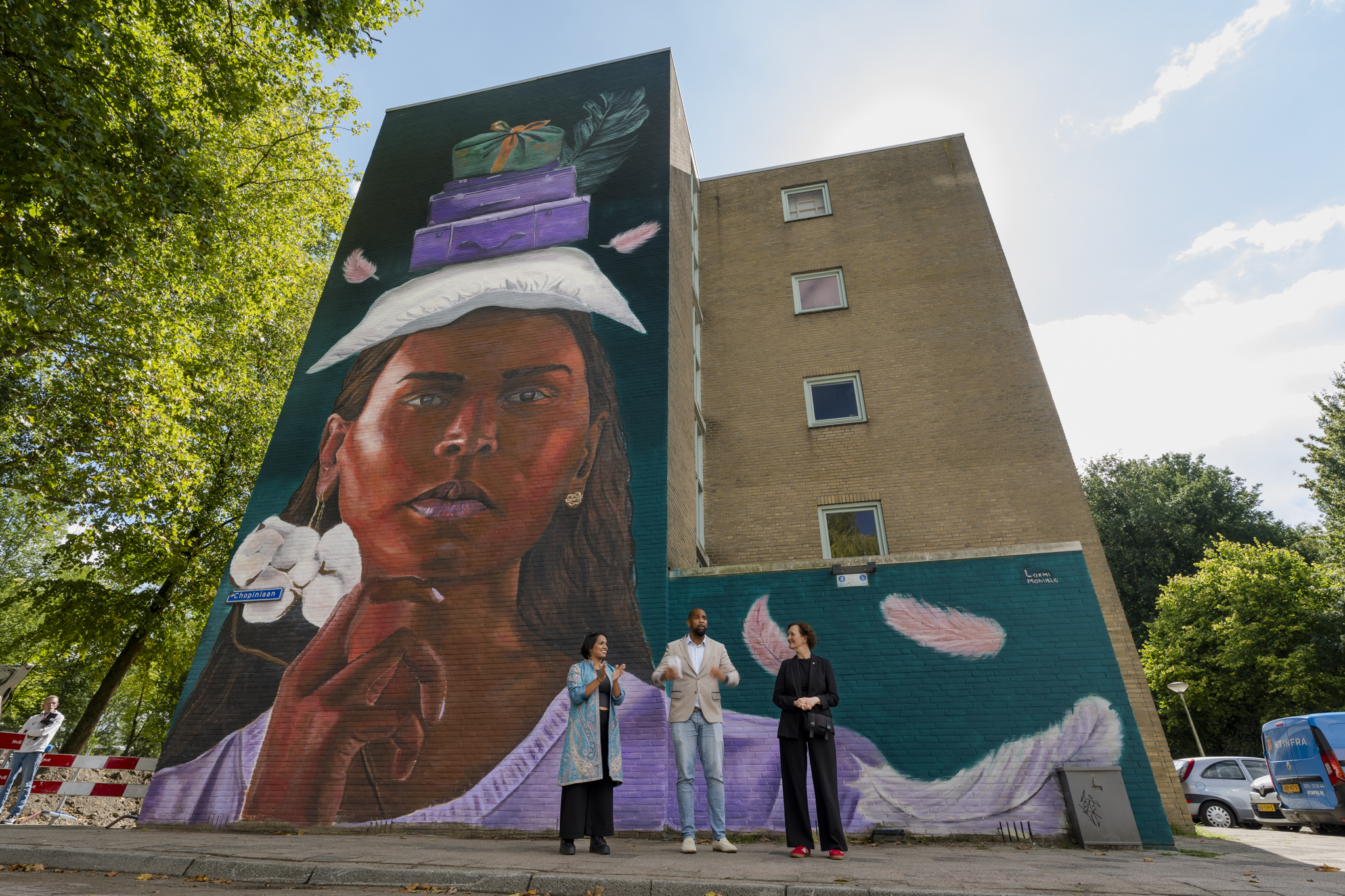
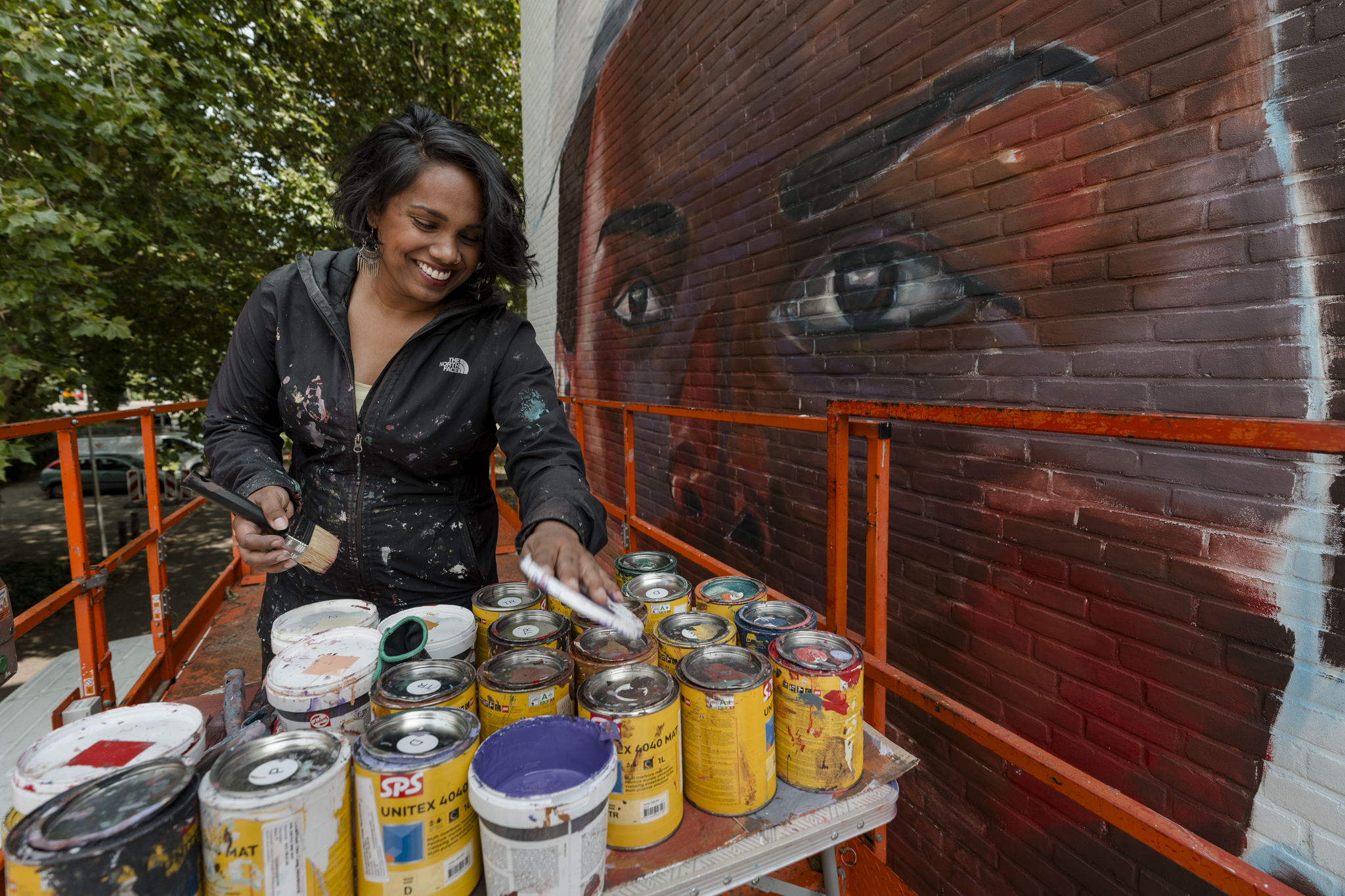
On the Schubertflat, you can see the mural “Meri Kahani,” or “My Story,” created by artist Laxmi Manuela. This artwork is a co-creation of local residents, Laxmi Manuela, Museum Prinsenhof Delft, and the NOBIS Community Art project of the CANIDREAM foundation.
With the question “Which family story should be passed on?”, Laxmi Manuela went into the neighborhood to collect stories from residents. During inspiring workshops with young and old, the enormous cultural wealth of the Buitenhof came forward. Many special stories, often about migration to the Netherlands in recent history, were shared.
The artist translated these stories into this monumental work of art. Laxmi Manuela explains:
"This painting is about women empowerment. I was inspired by stories from residents of the Buitenhof, by the portrait photographs taken by Jacobus Anthonie Meessen in the Dutch East Indies (now in the collection of Museum Prinsenhof Delft), and by the history of the Dutch East India Company. This history is often told from the perspective of trade and power, but I want to show the other side: the women who silently carried this history.
The woman in my painting symbolizes resilience and connectedness. The suitcase on her head refers to migration and carrying family stories with her. The pillow represents dreams and hope. The cotton branch refers to slavery—a painful legacy of the colonial system. Together, these elements depict how women have carried the past and the future with them for generations.
Whether I'm creating murals or more intimate work in the studio, empowering women is always central. Their strength, their stories, and their legacy are at the heart of my art."
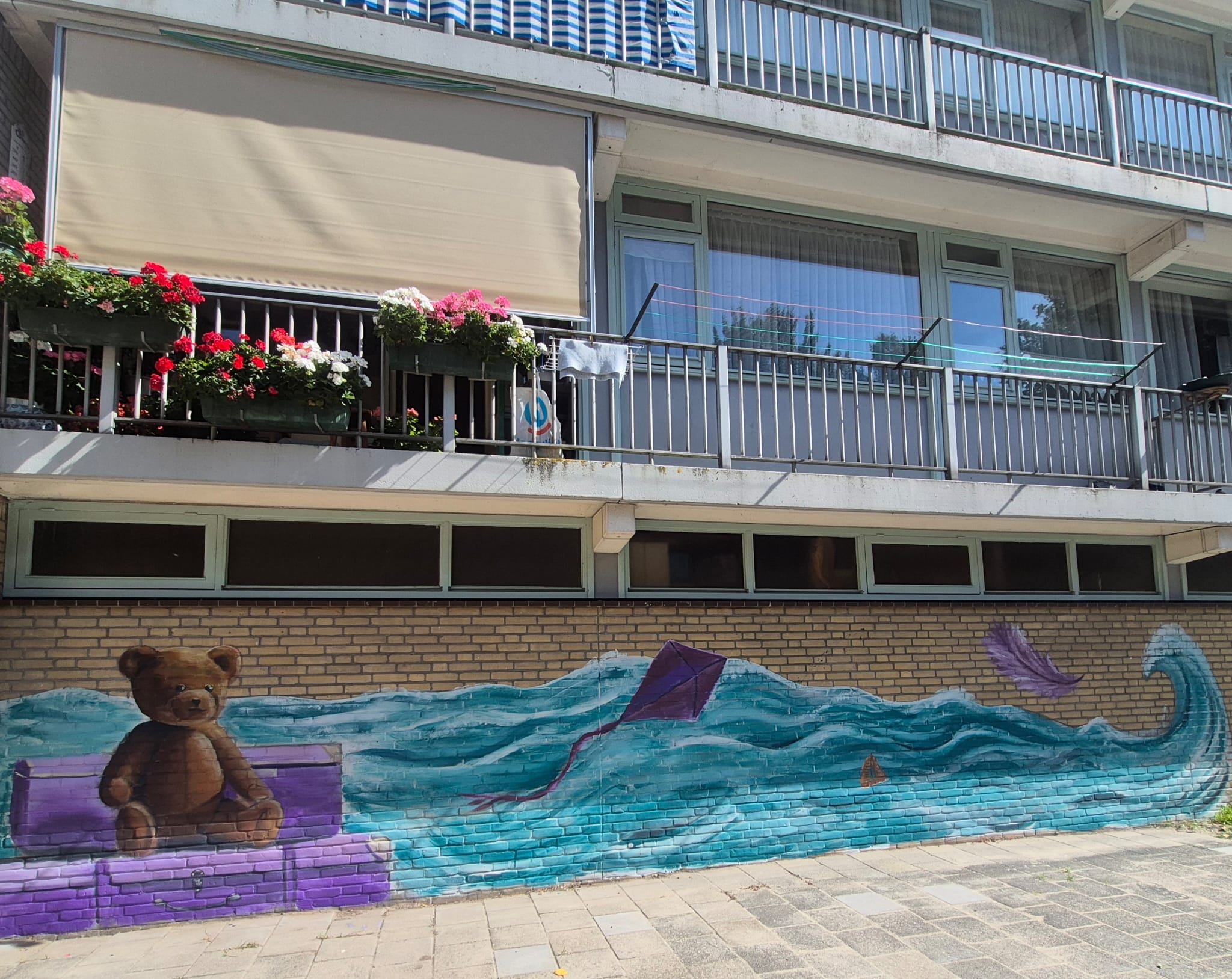
Local residents were very involved: they actively participated in painting and shared their personal stories, which are reflected in this work. Children from the neighborhood helped paint the side wall. Symbols related to migration have also been incorporated into the artwork. These include cuddly toys that children take with them on their travels, waves representing a journey full of movement and change, a kite symbolizing freedom, and a feather symbolizing ancestors who travel with them.
Tunagari and Meri Kahani are part of NOBIS 4. Entitled “Restoring the Balance,” two historical stories intersect in the present about the role of the Dutch East India Company in the past.
Follow the artists and partners on Instagram for more:
- BEYOND @roelof.beyond
- Mural Kings @muralkings
- Kensuke Miyazaki @miyazakingdom
- Over the Wall @0verthewall
- Laxmi Manuela @laxmimanuela
- CANIDREAM @canidream_ en @nobis.015
- Museum Prinsenhof Delft @museumprinsenhofdelft